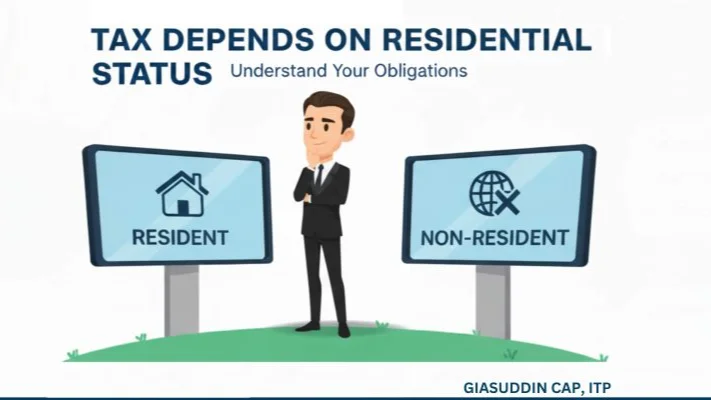
Tax Depends on Your Residential Status!
Step 1: Determine the Residency Status of the Individual
The first step in preparing an income tax return is to determine the residency status of the taxpayer. Under the Income Tax Act 2023, a person will be considered a resident of Bangladesh if they fulfill either of the following conditions:
- Have stayed in Bangladesh for 183 days or more in the relevant financial year, or
- Have stayed in Bangladesh for 90 days or more in the relevant financial year, and a total of 365 days or more across the previous four financial years.
If neither condition is met, the individual is considered a non-resident for that financial year.
Step 2: Determine the Range of Total Income
The range of a taxpayer's total income also depends on their residency status:
Resident Taxpayer
Both income earned in Bangladesh and income earned abroad are included in total income.
Non-Resident Taxpayer
Only income earned in, or received in, Bangladesh is included in total income.
The tax scope for a resident taxpayer is much wider, because foreign income is also included in it.
Step 3: Determining Tax Liability
- Resident taxpayer — tax is payable in stages according to income, determined by slab rates ranging from 0% to 30%.
- Non-resident taxpayer — taxed at a maximum flat rate of 30%, meaning all income is taxed directly at that rate.
Step 4: Benefits of the Double Taxation Avoidance Agreement (DTAA)
When a taxpayer pays tax on income abroad and also has to pay tax in Bangladesh on that same income, it's known as double taxation. To avoid this burden, Bangladesh has signed Double Taxation Avoidance Agreements (DTAA) with many countries. Under these agreements, taxpayers can:
- Claim a tax credit against tax already paid abroad, or
- Get an exemption as per the tax treaty signed between the two countries.
Why Is This Important?
Whether you are a resident or a non-resident — this determination affects the amount of tax owed, the type of return you file, and even your eligibility for tax credits. Taxpayers should therefore:
- Determine their residency status correctly.
- Declare foreign income correctly.
- Seek advice from an experienced tax professional if necessary.
A taxpayer's residency status is not just a formal definition — it is the foundation of their tax planning, obligations, and benefits. Determining and declaring it correctly will keep you free from legal risk and help you build a legal, orderly financial position.
Disclaimer: This article is intended for general information and educational purposes only and does not constitute tax or legal advice. Residency rules, slab rates, and DTAA provisions are governed by the Income Tax Act 2023, NBR rules, and the applicable tax treaties, and may change over time. Verify current requirements with the relevant authority or a licensed tax professional before acting.
Comments
Loading comments…