
Business Tax & Startup Insights in Bangladesh: A Practical Guide for Entrepreneurs
1. Choose the Right Business Structure
One of the first decisions for a startup is selecting an appropriate legal structure. Your choice affects ownership, liability, taxation, reporting requirements, and future investment opportunities.
- Sole proprietorship: Often suitable for individual entrepreneurs and small businesses. The owner generally carries personal responsibility for business obligations.
- Partnership: Suitable for two or more individuals operating a business together under an agreed ownership and profit-sharing arrangement.
- Private limited company: Often preferred by growing businesses that require a separate legal entity, formal shareholding, or investment from multiple shareholders.
- Other specialised structures: Certain businesses may use alternative legal forms depending on activities, ownership, and regulatory requirements.
Before choosing a structure, consider your business objectives, expected revenue, liability exposure, ownership arrangements, compliance costs, and plans for expansion.
Startup insight: The simplest structure is not necessarily the best structure for every business. Review your options with a qualified professional before registration.
2. Complete the Essential Business Registration Formalities
Depending on the nature and location of your business, you may need to complete several registration and licensing requirements, including:
- Obtaining a trade licence from the relevant local authority.
- Obtaining an e-TIN for applicable income tax purposes.
- Registering a company with the Registrar of Joint Stock Companies and Firms (RJSC), where applicable.
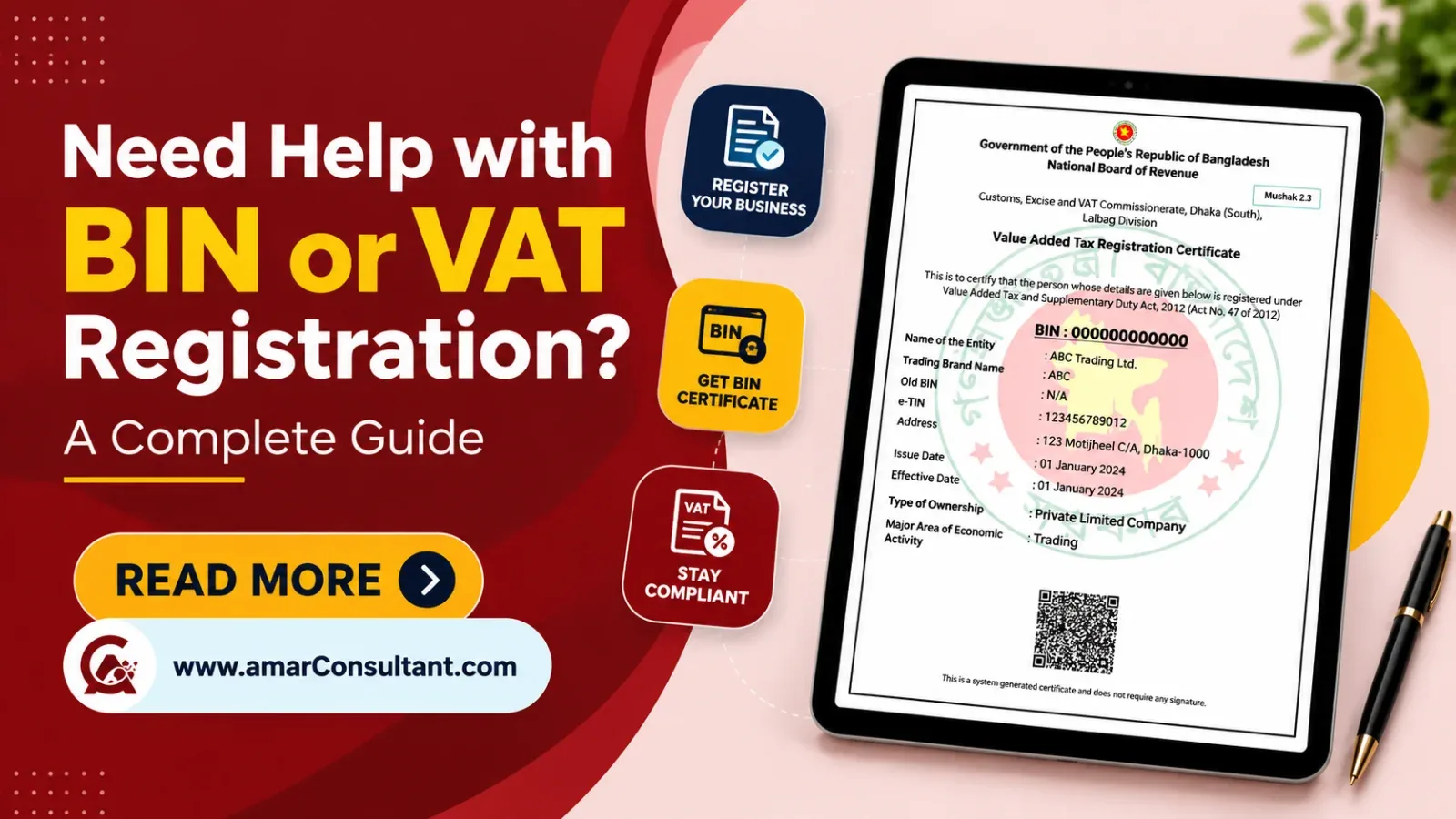
- Obtaining a Business Identification Number (BIN) and completing VAT-related formalities when required.
- Opening a business bank account and maintaining appropriate financial records.
- Obtaining sector-specific licences, permits, or approvals where applicable.
Not every registration applies to every startup. The correct checklist depends on your legal structure, business activity, turnover, location, and applicable laws. Importers, exporters, manufacturers, online sellers, and regulated service providers may face additional requirements.
3. Understand Business Income Tax in Bangladesh
Income tax planning should begin before your first financial year ends. Key considerations include:
- Taxable business income: accounting profit and taxable profit may differ because tax law can require adjustments for disallowed expenses, depreciation, exempt income, and other items.
- Allowable business expenses: properly documented expenses incurred for business purposes may qualify for deduction — personal expenses shouldn't be treated as business deductions just because they're paid from a business account.
- Advance tax and TDS: depending on circumstances, a business may need to pay advance tax or account for tax deducted or collected at source.
- Tax returns and documents: maintain invoices, bank statements, expense records, payroll information, and tax deduction certificates.
- Company taxation: companies and individual business owners may face different tax treatment, filing requirements, and rates.
Tax rates, exemptions, thresholds, and filing deadlines can change through Finance Acts and official notifications. Always verify the rules applicable to the relevant income year before making tax decisions.
4. Know When VAT Registration and Compliance Apply
The applicable obligations depend on the business's activities, turnover, supplies, and the VAT and Supplementary Duty Act, 2012. Before launching, determine whether your business needs VAT registration or enlistment and what invoicing and reporting requirements apply.
- Determining whether your goods or services are taxable, exempt, or subject to special treatment.
- Assessing the applicable registration or enlistment requirements.
- Issuing appropriate VAT invoices and maintaining purchase and sales records.
- Evaluating input VAT credit eligibility and maintaining supporting documentation.
- Filing VAT returns when required.
- Reviewing VAT implications for imports, exports, online sales, and B2B transactions.
Startup insight: Do not assume a small business is automatically exempt from VAT obligations. Verify the applicable thresholds and conditions under current rules.
5. Build a Reliable Bookkeeping System from Day One
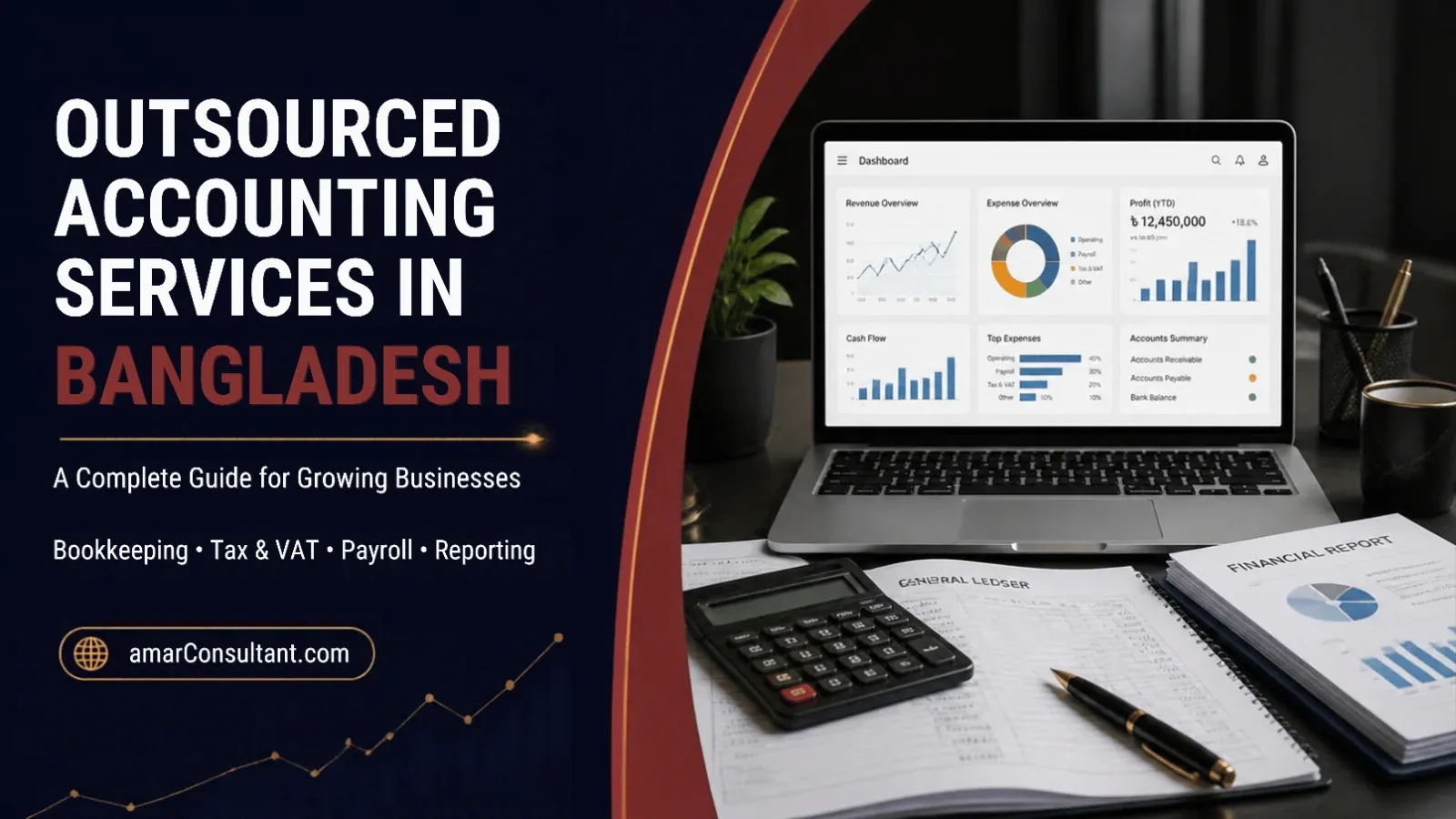
Poor bookkeeping makes it difficult to determine whether a startup is profitable, pay taxes accurately, manage cash flow, or demonstrate financial performance to lenders and investors. At a minimum, maintain records for:
Prepare regular financial statements — income statement, balance sheet, and cash flow statement. A cloud-based accounting system can reduce manual errors, improve reporting, and make records easier to retrieve when needed.
6. Manage Tax Deducted at Source and VAT Deducted at Source
Businesses that make certain payments may have withholding obligations under applicable income tax or VAT rules — commonly on contractor payments, professional fees, rent, and supplier payments.
A practical compliance process:
- Identify the nature of the payment and the applicable legal provision.
- Determine the relevant deduction rate and calculation basis.
- Deduct and deposit the required amount within the applicable deadline.
- Maintain transaction-level records and supporting documents.
- Issue the required certificates and complete applicable reporting.
Rates and procedures can differ by transaction type, recipient status, and current law. Avoid applying one rate to every supplier or payment.
7. Prepare a Startup Budget and Cash Flow Forecast
A business can generate sales and still run out of cash — often from underestimating operating costs, payment delays, inventory needs, taxes, or expansion expenses. Your initial budget should consider:
- Registration and licensing expenses.
- Office, software, equipment, and communication costs.
- Inventory or raw materials.
- Employee salaries and contractor fees.
- Marketing and customer acquisition.
- Accounting, tax, legal, and professional fees.
- VAT, tax withholding, and other statutory cash requirements.
- Emergency reserves and working capital.
Prepare a monthly cash flow forecast for at least the next 6–12 months. Compare actual performance with your budget and update your assumptions regularly.
Startup insight: Keep business and personal finances separate. Mixing them makes it harder to measure profitability and maintain reliable tax records.
8. Common Business Tax Mistakes Startups Should Avoid
Many compliance problems begin with small administrative oversights:
- Starting operations without checking the required licences and registrations.
- Missing tax return or VAT return deadlines.
- Treating personal expenditure as deductible business expenditure.
- Failing to maintain invoices and supporting documents.
- Applying incorrect TDS or VDS rates.
- Ignoring tax deducted at source certificates received from customers.
- Confusing accounting profit with taxable income.
- Assuming company registration automatically completes all tax and VAT formalities.
- Waiting until year-end to organise financial records.
- Making tax decisions using outdated rates or unofficial advice.
A monthly compliance review can help identify problems before they become expensive.
9. Create a Simple Monthly Compliance Calendar
A recurring compliance calendar helps founders manage deadlines without disrupting daily operations.
| Frequency | Recommended activity |
|---|---|
| Daily or weekly | Record sales, purchases, receipts, and payments. |
| Monthly | Reconcile bank accounts and review receivables and payables. |
| Monthly, where applicable | Review VAT returns, withholding tax deposits, and related records against statutory deadlines. |
| Quarterly / periodic | Review advance tax obligations, cash flow, and financial performance. |
| Annually | Prepare financial statements, complete income tax filing, review licence renewals and other annual obligations. |
This is a management checklist, not a substitute for a statutory deadline calendar. Confirm the exact filing and payment dates applicable to your business.
10. How Professional Tax and Business Consultancy Can Help
Professional support can be valuable when a startup is choosing a legal structure, assessing tax exposure, registering for VAT, implementing accounting software, or preparing statutory returns. A qualified tax or business professional may help you:
- Evaluate business structure and registration requirements.
- Develop a tax compliance checklist.
- Review bookkeeping systems and financial statements.
- Assess VAT and withholding tax obligations.
- Prepare for tax audits and respond to information requests.
- Improve budgeting and cash flow management.
- Identify compliance risks before expansion.
The objective is not simply to file returns. It is to build a business that can make informed decisions while meeting its legal obligations.
Disclaimer: This article provides general educational information, not individualised legal, tax, or accounting advice. Requirements depend on the facts of each business and the laws in force at the relevant time. Verify current requirements with the National Board of Revenue (NBR), RJSC, the relevant local authority, or a qualified professional.