Customs Bond License in Bangladesh: Eligibility & How to Apply
What Is a Customs Bond License?
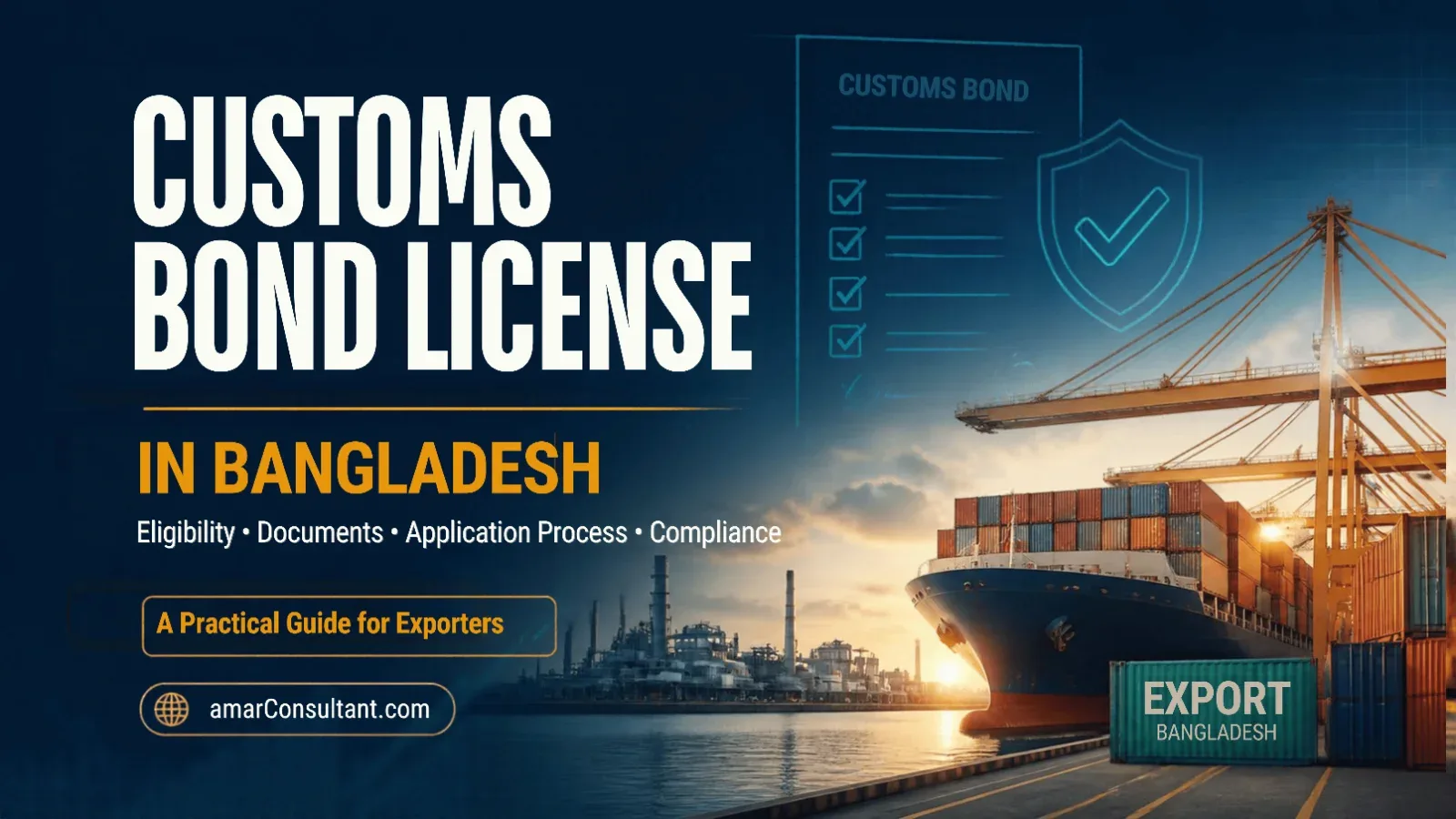
A Customs Bond License, commonly referred to as a Bond License or Bonded Warehouse License, is an authorization issued by the competent customs authority that allows eligible businesses to operate under the bonded warehouse facility.
The system enables qualifying businesses to import approved raw materials, intermediate inputs and packaging materials for authorized purposes under specified customs conditions. Instead of paying applicable import duties and taxes upfront on every eligible consignment, the license holder can receive the benefit of the bonded facility within the scope of the license and applicable regulations.
For export-oriented businesses in Bangladesh, this is often the single biggest lever for keeping cash out of the port and in the business — provided eligibility and compliance are handled correctly.
Who Needs a Customs Bond License in Bangladesh?
A Customs Bond License may be relevant to businesses that qualify for bonded warehouse facilities under the applicable laws and rules. Potential applicants include:
- Ready-made garment manufacturers and exporters.
- Knitwear, woven garment and sweater manufacturers.
- Textile and other eligible export-oriented manufacturing industries.
- Businesses supplying eligible inputs or products to export-oriented industries under qualifying arrangements.
- Other industries or entities specifically eligible under the applicable bonded warehouse regulations.
Eligibility depends on the nature of the business, export arrangements, legal status, production facilities, supporting registrations and the requirements of the competent customs authority. Verify eligibility before making significant investments in the application process.
Benefits of a Customs Bond License
1. Reduced Upfront Import Costs
No duty paid upfront on approved materials — improves working-capital management.
2. Improved Export Competitiveness
Lower input costs help manufacturers price more competitively internationally.
3. Better Cash-Flow Management
More working capital available for wages, utilities, logistics and production.
4. Support for Export Manufacturing
Facilitates access to the imported inputs eligible export production depends on.
5. Structured Import & Production Management
Encourages organized records of imports, inventory, consumption and exports.
The actual benefits depend on the business's eligibility, product classification, applicable taxes, license conditions and compliance performance.
Documents Required for a Customs Bond License
Prepare a complete documentation file based on the current checklist from your Customs Bond Commissionerate. Depending on business structure and industry, you may need:
Business registration & legal documents
- Prescribed Customs Bond License application form.
- Updated trade license.
- Relevant investment or industrial registration, where applicable.
- Certificate of Incorporation and Memorandum & Articles of Association (for a company).
- Identification documents of the proprietor, partners, or directors.
Tax & VAT documents
- e-TIN and applicable income tax documents.
- Relevant tax returns and supporting statements.
- VAT registration certificate and Business Identification Number (BIN).
Factory & operational documents
- Updated fire license and other safety approvals.
- Factory ownership documents or a valid rental agreement.
- Factory layout plan and machinery purchase invoices.
- Boiler certificate, where applicable.
- Utility bills and evidence of operational capacity, where required.
Banking & financial documents
- Relevant bank certificates and lien bank information.
- Evidence of financial capacity to execute the required general bond.
Supporting documents
- Industry association recommendations, where applicable.
- Affidavits and declarations required under the relevant procedures.
- Additional environmental, local authority, or regulatory approvals, where applicable.
Documentation note: Older online checklists may refer to superseded fees, forms, or document requirements. Obtain the latest checklist and verify applicable requirements before submission.
How to Apply for a Customs Bond License
The precise steps depend on the applicable rules and the competent licensing authority, but the process generally runs through these stages:
- Assess eligibility — review your business category, export arrangements, factory facilities, and proposed imported inputs.
- Prepare the application and supporting documents — keep business names, addresses, and registrations consistent across every document.
- Submit the application to the appropriate Customs Bond Commissionerate or NBR-authorized authority, with the applicable fee.
- Document scrutiny — the authority reviews your submission; be ready to clarify or correct any discrepancies.
- Physical verification — an inspection of your factory layout, machinery, safety measures, and the relationship between raw materials and finished products.
- Risk assessment and approval — the authority assesses business, operational, and revenue risk before deciding.
- Execute the general bond and complete formalities — confirm the bond amount, validity, and security requirements with the licensing authority.
What Is Bond Entitlement?
Bond entitlement determines the permitted scope or quantity of inputs that a license holder may import or use under the bonded facility, as applicable to the relevant category. Entitlement can depend on production capacity, export performance, approved inputs, and applicable input-output coefficients.
For eligible RMG exporters, Utilization Declarations (UDs) and Master LCs play an important role in determining the inputs required for export production. Other eligible industries may need to follow the applicable Utilization Permission (UP) procedures.
Carefully reconcile imported quantities, material consumption, production output, and exports to stay within the applicable permissions and limits.
Compliance Obligations After Obtaining a Bond License
Receiving a license is the beginning of the compliance process, not the end. Maintaining compliance is essential to protect the business's bonded facility and avoid disputes or financial exposure.
- Maintain accurate inventory records — imported materials, warehouse receipts, consumption, wastage, finished goods, and exports.
- Monitor input-output consumption — against approved coefficients and utilization permissions.
- Reconcile imports with exports — Bills of Entry, invoices, LCs, production and export records, stock balances.
- Monitor license and bond validity — keep a compliance calendar for formalities and renewal deadlines.
- Prepare for customs audits and inspections — keep records organized and readily available.
- Investigate discrepancies promptly — unexplained shortages or unauthorized disposal of bonded goods create real customs and financial risk.
Frequently Asked Questions
What is a Customs Bond License in Bangladesh?
An authorization for eligible businesses to operate under the bonded warehouse facility, allowing qualifying imported inputs specified customs and tax treatment under applicable conditions.
Which businesses can apply?
Eligible export-oriented manufacturers and other qualifying entities, subject to the relevant laws, licensing rules, and business category.
Is a Customs Bond License the same as an import registration certificate?
No — they serve different regulatory purposes. Identify and obtain the registrations applicable to your activities separately.
Does a bond license make all imports duty-free?
No. It applies only to eligible goods and transactions within your authorization, entitlements, and conditions.
How long does it take to obtain a Customs Bond License?
It depends on application completeness, verification requirements, and the authority's workload — confirm an estimated timeline with the relevant office.
What is the cost of obtaining a Customs Bond License?
It depends on current prescribed fees, applicable VAT, documentation, professional assistance, and any required bond or security arrangements. Verify the current official fee schedule.
Can a business apply before its factory is fully operational?
Verify the applicable eligibility and operational-readiness requirements first — physical verification may assess machinery, premises, and production capacity.
What happens if a license holder fails to comply with bond conditions?
Non-compliance can lead to additional duties or taxes, financial exposure, penalties, or other regulatory action, depending on circumstances and applicable law.
Disclaimer: This article is intended for general information and educational purposes. Licensing decisions, eligibility, fees, bond amounts and compliance obligations are governed by the applicable laws, rules, SROs and directions of the competent authorities. Verify current requirements before acting.